

Table of Contents
Business Model Definition
A business model consists of a value and architecture of value creation and a profit model.
The description enables potential investors, among other things, to identify the critical factors of business success or failure.
The innovations can complement or replace product or process innovation in increasingly saturated markets.
What is the purpose of making a business model?
- The production of a business model serves several purposes – the one involved is very intensively concerned with all essential aspects of the company.
- When writing the model, that can help them to understand it better themselves. On the other hand, the unique selling proposition can work out even more clearly by enabling a better positioning on the market.
- Also, a mature business model allows a better assessment of the scalability of a business idea.
How can a Business Model be described concretely?
Thus reflects how a company manages to generate sales. The business model of manufacturing companies differs considerably from that of a service company. The difference results primarily from the way in which the value is added.
While a manufacturing company produces an end product through various processing steps, the value at the service provider arises when the service is provided by the customer or on a customer’s property.
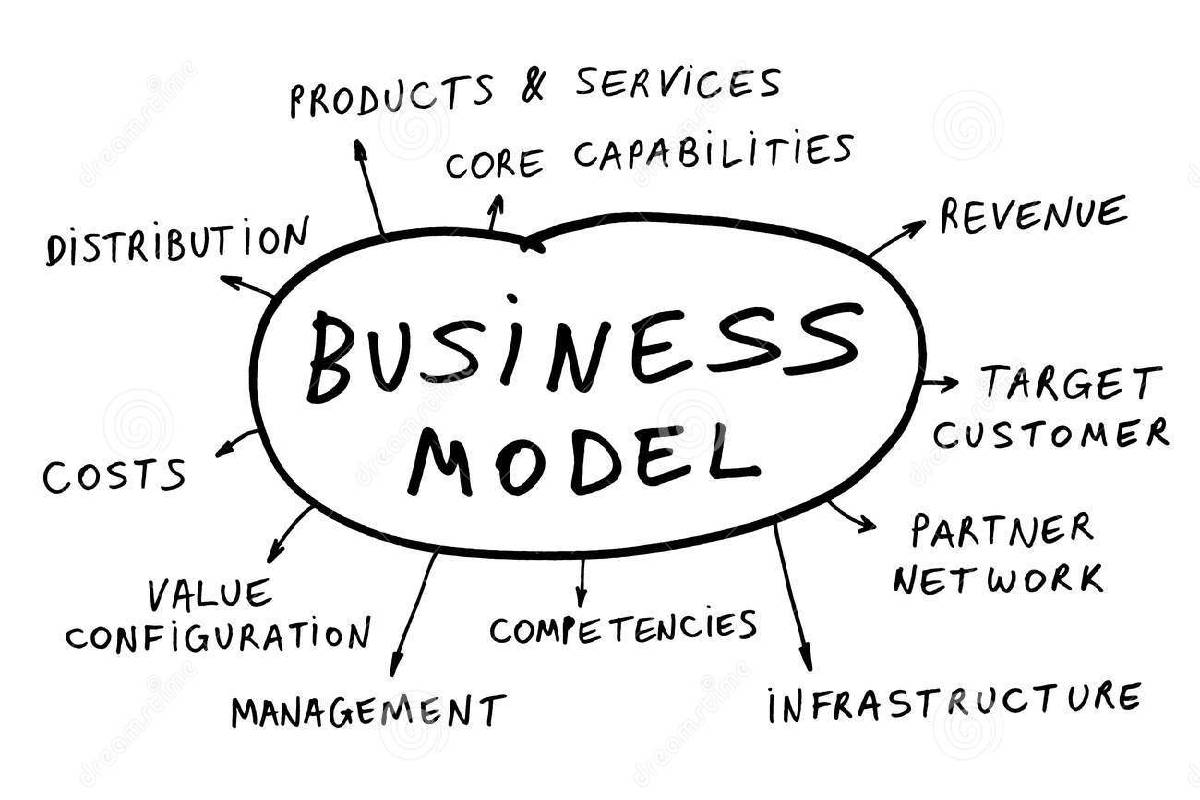
A company’s model describes the basic principle according to which an organization creates, communicates, and records values. The following aspects can best describe it:
- unique selling point
- Submarkets
- Key activities
- Key partner
- Customer relationship management
- Distribution channels
- Key resources
- Cost structure and revenue channels
What are the Online Business Models on the road to success worldwide?
- Digital technologies, especially the Internet, offer companies new opportunities to add value.
- Sophisticated digitization strategies developed to increase efficiency, process quality, and sales, as well as to reduce costs and error rates.
- Innovative technologies are integrated into existing models or used to develop new business models.
- Depending on the direction of their business model, particularly innovative start-ups can open up new markets or disrupt existing markets aim to by displacing analog competitors.
What are the Two Business Models in franchising?
In franchising, it describes the way in which a franchise company generates sales. There are two models:
- First, the business model for the franchise Open to r: This is the franchise idea and the know-how, for the franchise in its corporate foundation acquires the license and with whom the local audiences served.
- On the other hand, the expanded model of the network, franchisor, or overall system. It includes the objectives of the whole network, the selection of franchisees, and the income from franchise fees.
A business model is far more than a simple description of how a company earns money. It is a strategic blueprint that outlines how value is created, delivered, and captured in a sustainable way. As markets evolve and customer expectations change, strong business models help companies remain competitive, innovate faster, and adapt to new conditions. In today’s business environment—marked by digital transformation, global competition, and rapid technological change—the importance of a well-designed business model has reached an entirely new level.
Why Business Models Are Becoming More Critical Than Ever
In the past, businesses could rely heavily on product features or pricing advantages. But modern markets are more saturated and competitive. Products can be copied, technologies can be replicated, and price advantages rarely last. What truly differentiates successful companies today is their ability to design unique business models that create value in ways competitors cannot easily imitate.
For example, Netflix didn’t just offer movies—it introduced a subscription-based, on-demand model that reshaped the global entertainment industry. Similarly, Airbnb leveraged the sharing economy concept to create a marketplace without owning physical property. These companies did not succeed because of their products alone, but because their business models transformed existing industries.
This shows why business model innovation is sometimes more impactful than product or process innovation. It allows companies to redefine how they operate, scale faster, explore new revenue streams, and reach customers more efficiently.
Core Components of a Strong Business Model
A clear and structured business model typically includes several key components:
1. Value Proposition
Explains the core value the company delivers to customers. This includes solutions to problems, benefits offered, and the unique selling point that sets the business apart.
2. Revenue Streams
Defines how the company earns money—from sales, subscriptions, licensing, advertising, commissions, or other channels.
3. Customer Segments
Specifies the target audiences or markets that the business serves. Each segment may have unique needs and behaviors.
4. Channels
Describes how the business reaches and communicates with its customers. These include physical stores, online platforms, social media, and distribution partners.
5. Customer Relationships
Outlines how the business interacts with customers—through automation, personalized support, self-service tools, loyalty programs, or community-building.
6. Key Activities
Highlights what the company must do exceptionally well, such as manufacturing, service delivery, marketing, or technology development.
7. Key Resources
Identifies essential assets—such as skilled staff, intellectual property, machinery, software, or supplier relationships.
8. Key Partnerships
Shows which external parties contribute to success, like suppliers, affiliates, logistics partners, or franchisees.
9. Cost Structure
Lists major operational costs and helps determine profitability, scalability, and growth potential.
Understanding these components makes it easier to analyze how a business functions and where improvements or innovations can be made.
Examples of Successful Online Business Models
With the rise of digitalization, online business models have expanded dramatically. Some of the most impactful ones include:
Freemium Model
Platforms like Spotify or Dropbox offer free basic features while charging for premium upgrades. This lowers the barrier to entry and enables rapid user acquisition.
Subscription Model
A recurring payment structure used by software companies (SaaS), digital magazines, and streaming platforms. It provides predictable revenue and long-term customer relationships.
Marketplace Model
Companies such as Amazon, Etsy, and Uber act as intermediaries, connecting buyers and sellers without owning the products. This model benefits from network effects—the more users involved, the more valuable the platform becomes.
Affiliate Model
Content creators, bloggers, and influencers earn commissions by promoting products or services through special referral links.
Advertising Model
Platforms like Facebook, YouTube, and Google offer free services to users while generating revenue from advertisers targeting those users.
Dropshipping Model
Online stores sell products without holding inventory. The supplier ships directly to the customer, reducing the seller’s risk and investment.
These models highlight how digital transformation enables scalable, low-cost, and highly profitable business structures.
Why Franchising Business Models Work
The two business models in franchising—individual franchise operations and the overarching franchise system—play distinct yet interconnected roles. Franchisees benefit from established branding, proven strategies, operational manuals, and ongoing support. Meanwhile, franchisors earn through licensing fees, royalties, and sometimes the supply of goods.
This structure allows rapid expansion with reduced financial risk for the parent company. For franchisees, it lowers the barriers of starting a business from scratch. The shared-interest model ensures both sides work toward mutual growth and brand consistency.
Final Thoughts
A well-designed business model acts as the foundation of business strategy, guiding decision-making, operations, and long-term growth. Whether you’re starting a new venture, expanding an existing one, or adapting to market shifts, refining your business model is one of the most valuable steps you can take. Companies that understand and continuously innovate their business models not only survive but thrive—even in highly competitive markets.
Also Read: The Guide, Strategies, and Resources on Sales Management